Sustainable Infrastructure: Investment Readiness and Delivery
Leila Haddad, Mikhail Turov · 14 October 2025

An evidence-based assessment of why the binding constraint on sustainable infrastructure is shifting from the availability of capital to the readiness of projects and the capacity to deliver them, with segment-level sizing, a regional cost-of-capital lens, and scenarios to 2030.
Executive summary
For most of the past decade, the debate on sustainable infrastructure has been framed as a financing problem: the sums required to decarbonise energy systems, modernise transport, secure water, extend digital access, and build resilience against a changing climate were said to exceed what public and private balance sheets could provide. That framing is now incomplete. Global pools of institutional capital are large, liquid, and — in aggregate — under-allocated to infrastructure. The more accurate diagnosis in 2025 is that the binding constraint has shifted from the availability of capital to the readiness of projects and the capacity to deliver them. Capital is abundant in the places that already have deep markets and scarce in the places that need it most, and everywhere it is waiting for pipelines of well-structured, de-risked, deliverable projects that do not yet exist at the required scale.
This report sizes the market, disaggregates it by segment, and examines the two constraints that now govern outcomes: investment readiness — the preparation, structuring, and risk allocation that make a project financeable — and delivery capacity — the permitting systems, supply chains, skills, and construction productivity that turn a financed project into an operating asset. We estimate that sustainable infrastructure attracted on the order of USD 1.5–2.0 trillion of investment in 2024, concentrated heavily in clean power and in a small number of large economies. Independent public estimates suggest this figure needs to roughly double this decade to be consistent with widely stated climate and development objectives. The shortfall is not evenly distributed: advanced economies face a modernisation and grid-integration challenge, while emerging markets and developing economies (EMDEs) face a more fundamental readiness and cost-of-capital challenge that determines whether projects are built at all.
The single most consequential finding is that the cost of capital, rather than the cost of technology, is now the decisive variable for the economics of clean infrastructure in most developing economies. The same solar plant that is among the cheapest sources of electricity in a low-risk market can be uncompetitive in a higher-risk one, not because the panels cost more but because the money does. This shifts the policy and commercial agenda away from headline pledges and towards the machinery of risk mitigation: guarantees, first-loss layers, currency solutions, standardised contracts, and credible, stable regulation. These instruments remain small relative to need, and expanding them is the highest-leverage intervention available to public actors.
We close with three scenarios to 2030 and implications for governments, investors, and international institutions. The central message for decision-makers is that the returns to spending on readiness and delivery — project preparation, permitting reform, guarantee capacity, and workforce pipelines — are now higher than the returns to another round of aggregate capital commitments. The money is largely there. The projects, and the systems to deliver them, are not.
“The money is largely there. The projects, and the systems to deliver them, are not.”
Principal conclusions
- The bottleneck has moved. Aggregate global capital is not the primary constraint. The scarce resource is a supply of bankable, investment-ready projects — especially in EMDEs — and the institutional capacity to deliver them on time and on budget.
- Sizing and the gap. We estimate sustainable infrastructure investment at roughly USD 1.5–2.0 trillion in 2024, dominated by clean power. Public-agency pathways imply this needs to roughly double this decade; the gap is concentrated in grids, adaptation, and EMDE markets rather than in mature renewable generation.
- Cost of capital is decisive. In many developing economies, financing costs are two to three times those in advanced markets. This — not technology price — now determines whether clean projects clear investment hurdles, making risk mitigation the central lever.
- Delivery is underweighted. Permitting timelines, grid interconnection queues, construction productivity, and skills shortages are as material to outcomes as finance, yet receive a fraction of the attention. Delivery risk is where credible near-term gains are available in advanced economies.
- Public risk capital is the multiplier. Guarantees, first-loss capital, and currency hedging remain small relative to need. Their catalytic ratio — private capital mobilised per public dollar — is the metric that should govern the allocation of concessional resources.
- Definitions still fragment the market. The absence of a single, interoperable definition of "sustainable infrastructure" raises transaction costs, complicates comparison, and creates space for mislabelling. Convergence on taxonomies and project-level labelling would lower the cost of capital at the margin.
- Institutional allocation lags rhetoric. Pension funds, insurers, and sovereign funds hold assets measured in the tens of trillions but typically allocate low single-digit percentages to infrastructure, and far less to EMDE infrastructure, for reasons of mandate, liquidity, and risk perception rather than appetite alone.
1. Context and why it matters
Infrastructure is the physical substrate of economic activity: the grids, pipes, roads, rail, ports, cables, and buildings through which everything else moves. It is long-lived, capital-intensive, and shaped by decisions that lock in emissions and costs for decades. That durability is precisely why the sustainability of new and refurbished infrastructure matters so much. An electricity system, a transport corridor, or a city's water network built today defines the emissions, resilience, and service quality of a place for a generation. The infrastructure being planned and financed in this decade will still be operating in the 2050s, the horizon over which most economies have set net-zero and resilience commitments.
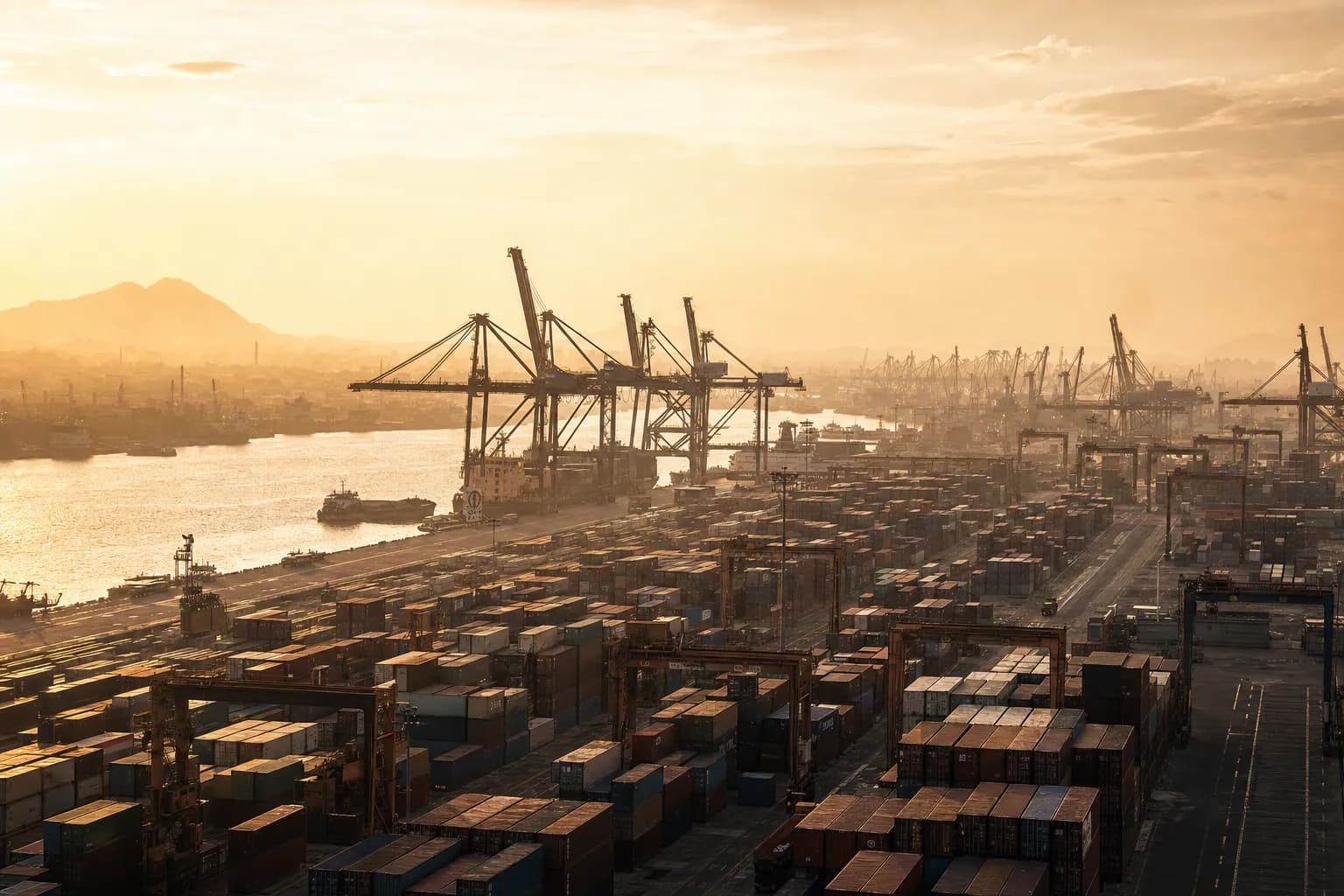
Three structural forces are raising the required rate of infrastructure formation at once. The first is decarbonisation: replacing fossil generation with renewables, electrifying transport and heat, and rebuilding grids for variable, distributed supply. The second is development and demography: hundreds of millions of people still lack reliable electricity, safe water, or all-weather roads, while urban populations in Africa and South Asia grow, requiring new capacity rather than mere replacement. The third is resilience: as climate impacts intensify, existing assets must be hardened and new assets designed for conditions that historical data no longer describe. In advanced economies a fourth force — the ageing of infrastructure built in the mid-twentieth century — adds a large replacement burden.
These forces converge on a common requirement for capital and delivery at a pace that current systems are not configured to supply. This matters beyond the sector itself because infrastructure sits at the intersection of the macroeconomic, the developmental, and the environmental: it is a determinant of productivity, a lever of poverty reduction and public health, and one of the largest single influences on the emissions trajectory. Whether the required investment is mobilised, and whether it is delivered efficiently, is therefore a first-order question for finance ministries, development institutions, and long-term investors alike. The framing of this report — readiness and delivery — reflects our judgement that the sector's central problem is no longer primarily whether the money exists, but whether the conditions for it to be deployed productively have been built.
2. Market structure and scale
Estimating the size of "sustainable infrastructure" investment is complicated by the absence of an agreed boundary. Definitions vary in whether they include vehicles as well as charging networks, whether they count end-use energy efficiency, and how they treat digital infrastructure or social assets such as hospitals and schools built to low-carbon standards. The figures below are therefore presented as transparent estimates, triangulated from published public-agency and multilateral reporting, and are indicative rather than additive to a single audited total. Segment ranges overlap and reflect our synthesis of the direction and order of magnitude reported across sources, not a proprietary measurement.
The dominant feature of the market is concentration. Clean power generation and its enabling infrastructure — grids and storage — account for the largest share of tracked flows, while adaptation, water, and digital infrastructure attract far smaller flows relative to assessed needs. Geographically, the overwhelming majority of clean-energy investment occurs in advanced economies and a handful of large emerging economies; most other developing economies attract a share that is small in both absolute and per-capita terms.
Table 1. Indicative annual sustainable infrastructure investment by segment, 2024 (analyst estimates)
| Segment | Estimated 2024 investment (USD bn) | Basis and notes |
|---|---|---|
| Renewable power generation | 650–850 | Solar PV and wind dominate; solar alone is the single largest line. Triangulated from public energy-agency reporting. |
| Grids and storage | 350–500 | Widely assessed as the emerging bottleneck; investment lags generation growth. |
| Energy efficiency and low-carbon buildings | 400–650 | Wide range reflects definitional breadth (retrofits, heat pumps, envelope). |
| Low-carbon transport (rail, EV charging, e-mobility infrastructure) | 300–550 | Excludes most private vehicle purchase; infrastructure and network share only. |
| Water, sanitation and resource systems | 120–220 | Sustainable/climate-aligned share of a much larger total water spend. |
| Digital connectivity | 200–350 | Included where it enables efficiency and access; boundary is contested. |
| Climate adaptation and resilience | 60–110 | Consistently assessed as the most underfunded segment relative to need. |
| Indicative total (non-additive) | ~1,500–2,000 | Segments overlap; total reflects our central synthesis, not a sum of maxima. |
The same estimates, seen as ranges, show both the concentration in clean power and how far the underfunded segments — grids, water, and adaptation — trail assessed needs.
- Low estimate (USD bn)
- High estimate (USD bn)
Two structural observations follow. First, the market is not short of mature, low-risk opportunities in renewable generation in deep markets; those attract capital readily and at competitive returns. The gap sits in the segments and geographies that are harder to finance — grids, storage, adaptation, and EMDE projects generally — precisely because they are less standardised, more exposed to policy and offtake risk, or generate revenues that are harder to contract. Second, the composition of the shortfall tells the readiness story directly: the underfunded segments are those where project preparation, revenue certainty, and risk allocation are least developed.
On the supply side, the pools of capital are large. Global pension assets are commonly estimated in the region of USD 50 trillion and insurance assets in the tens of trillions more, with total professionally managed assets above USD 100 trillion. Yet allocations to infrastructure as an asset class typically sit in the low single digits of portfolios, and allocations specifically to EMDE infrastructure are a small fraction of that. Unlisted infrastructure assets under management have grown substantially over the past decade but remain modest against the scale of need. The instruments through which capital reaches the sector — project finance, corporate balance sheets, green and sustainability-linked bonds, listed and unlisted funds, and public balance sheets — are well developed in advanced markets and thin where requirements are largest. This mismatch between where capital sits and where it is needed is the market-structure expression of the readiness problem.
3. Drivers, dynamics, and the readiness constraint
Why, if capital is abundant and the technologies are mature and often cheap, does investment not flow to close the gap? The answer lies in the mechanics of how long-lived infrastructure is financed. Institutional investors with long-dated liabilities are, in principle, natural holders of infrastructure: the asset's stable, inflation-linked cash flows match their obligations. In practice, they require projects that are of sufficient scale, that carry an acceptable and legible risk profile, and that fit within mandate and liquidity constraints. Most of the sustainable infrastructure that needs to be built — particularly in EMDEs — fails one or more of these tests not on its underlying economics but on its structuring.
Investment readiness is the set of conditions that closes this gap: a credible and stable regulatory and tariff framework; clear, enforceable contracts allocating construction, offtake, and currency risk to the parties best able to bear them; a project prepared to the standard at which a lender can conduct due diligence; and the scale and standardisation that allow institutional capital to participate without bespoke, high-cost analysis of every transaction. Where these conditions exist, capital flows quickly and cheaply. Where they do not, even well-conceived projects stall for years, or never reach financial close. The scarcity of prepared projects — not the scarcity of money — is why project preparation facilities and pipeline platforms have become central to the policy agenda.
These dynamics are self-reinforcing in both directions. A market that produces a steady flow of standardised, well-structured projects lowers the cost of capital over time as investors gain familiarity and price risk more finely; each successful project makes the next one easier. A market that produces sporadic, bespoke, hard-to-assess projects keeps risk premia high and perpetuates the perception that the segment is uninvestable. Much of the divergence between markets attracting sustainable infrastructure capital and those that are not is a difference in this compounding: the leaders are on a virtuous cycle of readiness, the laggards stuck in its inverse.
A further dynamic concerns the macro-financial environment. The period of higher interest rates since 2022 raised the discount rate applied to all long-dated, capital-intensive assets, squeezing the economics of projects whose value is dominated by upfront capital expenditure and long payback — which describes most renewable and resilience investment. This headwind is common to all markets, but it bites hardest where risk premia were already high, amplifying the divergence between low- and high-cost-of-capital jurisdictions. Readiness is, in part, a means of insulating a market from this effect: the better-structured a project, the lower the premium stacked on the risk-free rate, and the less sensitive it is to the macro cycle.
4. Regional and comparative lens: the cost-of-capital divide
The clearest way to see the state of the market is through the price of capital, because it summarises, in a single number, everything investors believe about a project's risk. Here the divergence is stark and consequential. In low-risk advanced-economy markets, well-structured renewable projects can be financed at costs of capital in the mid-single digits. In many developing economies, the equivalent project faces financing costs that are two to three times higher once country risk, currency risk, offtake and counterparty risk, and the thinness of local capital markets are priced in. Because clean energy assets are overwhelmingly capital cost rather than fuel cost, this difference in the price of money translates almost directly into the price of the electricity or service delivered. The same technology that is the cheapest option in one country is uncompetitive in another, for reasons that have nothing to do with the technology.
The cost-of-capital divide
| Category | Value |
|---|---|
| Advanced economies | 1× advanced-economy baseline |
| Developing (low end) | 2× advanced-economy baseline |
| Developing (high end) | 3× advanced-economy baseline |
This is the central comparative fact of the sector, and it reframes the policy problem. The task in high-cost-of-capital markets is not primarily to make technologies cheaper — they are already cheap — but to compress the risk premium. Each component of that premium has a corresponding instrument: currency risk can be addressed by hedging facilities and local-currency lending; offtake and counterparty risk by guarantees and credit enhancement; political and regulatory risk by insurance and stable, transparent frameworks; and the premium attached to unfamiliarity by standardisation and a demonstrable pipeline. The lesson from markets that have moved capital at scale is that they attacked each layer of the premium rather than relying on a single instrument or on aggregate pledges.
| Risk component | Corresponding instrument |
|---|---|
| Currency risk | Hedging facilities and local-currency lending |
| Offtake and counterparty risk | Guarantees and credit enhancement |
| Political and regulatory risk | Insurance and stable, transparent frameworks |
| Unfamiliarity premium | Standardisation and a demonstrable pipeline |
The regional picture also differs in the nature of the challenge. In advanced economies, the constraint is less about the price of capital and more about delivery: interconnection queues for new generation, permitting timelines for grids and transmission, local opposition, supply-chain concentration, and shortages of skilled labour. In these markets, capital is available but cannot be deployed fast enough because the delivery system is congested. In EMDEs, the constraint is more fundamental — the readiness and cost-of-capital problem that determines whether projects are financeable at all. A comparative implication is that the highest-value public interventions differ by context: permitting and grid reform in advanced economies, risk mitigation and project preparation in developing ones. Treating the sector as a single global market with a single solution obscures this, and a good deal of policy effort has been misallocated as a result.
There is also a distributional dimension. The countries with the least access to affordable infrastructure capital are frequently those with the greatest exposure to climate impacts and the largest unmet development needs, so the cost-of-capital divide compounds existing inequalities: the places that most need resilient, clean infrastructure pay the most to build it, or do not build it at all. This is the strongest argument for concentrating scarce concessional and public risk capital where it changes the financing calculus most.
5. Delivery: the underweighted constraint
If readiness determines whether a project can be financed, delivery determines whether a financed project becomes a functioning asset at reasonable cost — and here the sector's record is poor and under-examined. Large infrastructure projects have a long, well-documented history of cost overruns and schedule delays; the tendency to come in over budget and behind schedule is one of the more robust empirical regularities in the field. Sustainable infrastructure is not exempt, and in some respects is more exposed: grid and transmission projects face lengthy permitting and land acquisition; offshore wind and large storage stress specialised supply chains; and adaptation projects often lack the standardised delivery models that mature sectors enjoy.
Several delivery constraints deserve attention. Permitting and interconnection have become rate-limiting in several advanced markets, with financed, technically ready projects waiting years for approvals or grid connections; the queue, not the capital, is binding. Supply chains for key components and materials are concentrated, creating exposure to bottlenecks and price volatility. The skilled workforce required to build and maintain clean infrastructure — electricians, grid engineers, project managers — is in short supply, and training pipelines have not scaled with ambition. Construction productivity, which has stagnated for decades relative to other sectors, means even well-financed projects are built less efficiently than they could be.
Delivery risk is underweighted relative to finance risk because it is less visible in headline numbers. A pledge or a fund launch is announced and counted; a permitting reform or an apprenticeship programme is diffuse and slow. Yet in advanced economies, where capital is available, delivery reform offers some of the most credible near-term gains: shortening permitting timelines, clearing interconnection queues, and building workforce capacity can accelerate deployment without a single additional dollar of subsidy. The comparative neglect of delivery is, in our assessment, one of the clearer analytical failures in the current discourse, which remains disproportionately focused on mobilising capital relative to the systems that convert it into operating assets.
Readiness and delivery are also linked. A project that is well-structured financially but exposed to delivery risk — an uncertain permit, a congested supply chain — carries that risk into its financing, raising the cost of capital or deterring investors entirely. Improving delivery systems therefore improves readiness, and the two constraints are best treated not as separate problems to be solved in sequence but as a single system to be improved together.
6. Risks and what could go wrong
Several risks could alter the trajectory materially, and honest analysis requires naming them. The macro-financial environment is the first: a sustained period of higher-for-longer interest rates would continue to pressure the economics of capital-intensive projects, while a sharp easing would relieve them; the path of rates is genuinely uncertain and affects the whole sector. The second is political and policy risk: the durability of the frameworks on which long-lived investments depend cannot be taken for granted, and shifts in political direction — including a broader backlash against sustainability-linked policy in some jurisdictions — could weaken the offtake and regulatory certainty that readiness depends on. Investors price policy reversibility, and episodes of retroactive tariff changes or abrupt policy shifts have long memories in the cost of capital.
A third risk concerns the credibility of the market's own labels. The proliferation of green, sustainable, and transition-labelled instruments has outpaced the standardisation of what those labels mean, creating scope for mislabelling and, in turn, for a loss of investor confidence that would raise costs for genuine projects. Convergence on interoperable taxonomies and credible, verifiable project-level labelling is a mitigant, but its absence remains a source of friction and reputational risk. A fourth risk is concentration in supply chains and critical materials, which creates exposure to geopolitical shocks and price volatility that could raise costs and slow deployment.
Finally, there is the risk that the readiness and delivery agenda is itself under-resourced. Project preparation, guarantee capacity, and delivery reform are less visible and less politically rewarding than headline commitments, and resources may continue to flow disproportionately to aggregate pledges rather than to the systems that make them deliverable. If that pattern persists, the gap between committed and deployed capital — already substantial — would widen, and the credibility of the wider effort would suffer. We regard this as the most important governable risk, precisely because it is within the control of the actors involved.
Scenarios to 2030
We present three scenarios, distinguished not by capital availability — which we assume remains broadly ample in aggregate — but by how far readiness and delivery constraints are addressed. These are illustrative narratives with indicative trajectories, not forecasts, and the ranges reflect uncertainty rather than precision.
Table 2. Scenarios to 2030 (illustrative)
| Scenario | Defining feature | Indicative annual investment by 2030 (USD tn) | EMDE participation |
|---|---|---|---|
| Readiness Dividend | Project preparation, risk mitigation, and delivery reform scale together | ~3.5–4.0 | Broadening beyond current concentration |
| Two-Speed Buildout | Advanced economies accelerate; most EMDEs remain capital-starved | ~2.8–3.3 | Stagnant outside large emerging economies |
| Readiness Stall | Pledges outpace deployment; delivery and readiness under-resourced | ~2.2–2.6 | Persistently thin |
Readiness Dividend
Most consistent with stated goals
Guarantee and first-loss capacity, standardised contracts and labels, and project preparation scale in parallel; the cost of capital compresses and the virtuous cycle of readiness takes hold in a wider set of countries.
- Annual investment by 2030
- ~USD 3.5–4.0tn
- EMDE participation
- Broadening beyond current concentration
Two-Speed Buildout
Continuation of current patterns
Advanced economies resolve enough delivery constraints to accelerate and large emerging economies keep attracting capital, but most other developing economies remain outside the flow.
- Annual investment by 2030
- ~USD 2.8–3.3tn
- EMDE participation
- Stagnant outside large emerging economies
Readiness Stall
Genuine downside risk
Attention and resources stay concentrated on aggregate pledges while readiness and delivery are under-resourced; pledged capital fails to convert into deployed assets at scale and confidence erodes.
- Annual investment by 2030
- ~USD 2.2–2.6tn
- EMDE participation
- Persistently thin
- Low (USD tn)
- High (USD tn)
In the Readiness Dividend scenario, public and multilateral actors expand guarantee and first-loss capacity, standardise contracts and labels, and invest in project preparation and delivery systems in parallel. The cost of capital in high-risk markets compresses, pipelines thicken, and the virtuous cycle of readiness takes hold in a wider set of countries. Investment approaches the levels implied by stated goals, and — crucially — participation broadens geographically. This is the scenario most consistent with both the climate and development objectives that governments have adopted, but it requires sustained, unglamorous institutional effort rather than headline announcements.
In the Two-Speed Buildout scenario, advanced economies resolve enough of their delivery constraints to accelerate deployment, and large emerging economies continue to attract capital, but most other developing economies remain outside the flow. Global investment rises but falls short of stated goals, and the distributional and resilience gaps widen. This is, in our judgement, the trajectory most consistent with a continuation of current patterns: it is neither a failure nor a success, but a persistence of divergence.
In the Readiness Stall scenario, attention and resources remain concentrated on aggregate commitments while readiness and delivery are under-resourced. Pledged capital fails to convert into deployed assets at scale, the gap between commitment and delivery widens, and confidence erodes. Investment grows only modestly and remains highly concentrated. We do not regard this as the most likely outcome, but it is a genuine risk if the analytical and policy focus does not shift towards the constraints this report identifies.
What follows for decision-makers
For governments and policymakers
The highest-return public interventions are now in readiness and delivery rather than in aggregate commitment. Concretely, this means investing in project preparation capacity so that a pipeline of bankable projects actually exists; reforming permitting and grid interconnection to clear the delivery congestion that stalls financed projects in advanced economies; and providing stable, credible, and durable regulatory and tariff frameworks so that investors do not price policy reversibility into the cost of capital. Governments should also treat risk mitigation — guarantees, first-loss capital, and currency solutions — as a core function rather than a peripheral one, and should measure their interventions by the private capital mobilised per public dollar. In developing economies, concessional resources should be concentrated where they change the financing calculus most, not spread thinly or directed to projects that would have proceeded anyway.
For business, investors, and financial institutions
For long-term investors, the opportunity lies in building specialist capacity to originate, structure, and hold sustainable infrastructure — particularly in markets and segments underserved because they are harder to assess, not because they are uneconomic. First-movers who develop the teams and relationships to underwrite EMDE and adaptation projects stand to benefit as risk premia compress and the market matures. Investors should engage with the design of guarantee and blended-finance structures, since well-designed public risk capital can make otherwise unbankable projects investable at scale. For developers and contractors, the delivery constraint is also a commercial opportunity: capacity in project preparation, permitting navigation, and efficient construction is increasingly the scarce and valuable capability.
For international organisations and donors
Multilateral and development institutions occupy the pivotal position, because their balance sheets and instruments are the ones best suited to compressing the risk premium that governs EMDE outcomes. The priorities are to expand guarantee and risk-mitigation capacity substantially; to standardise contracts, taxonomies, and project labels so that transaction costs fall and capital can move without bespoke analysis of every deal; to fund project preparation at the scale the pipeline problem requires; and to report transparently on catalytic ratios so that concessional resources flow to where they mobilise the most private capital. The reform agenda for these institutions — expanding lending headroom and shifting towards mobilisation rather than direct lending alone — is directly relevant to the readiness constraint, and its pace will be a significant determinant of which scenario materialises.
Method, data and limitations
This report is a work of synthesis and analysis rather than primary measurement. Its quantitative estimates are derived by triangulating published figures and pathways from public and multilateral sources — including energy and renewable-energy agencies, multilateral development banks and development-finance institutions, climate-finance trackers, and standard-setting and infrastructure-outlook bodies — with structured desk research and our own judgement about direction and order of magnitude. We have deliberately presented segment sizings and forward trajectories as ranges rather than point estimates, and have flagged where figures are our own analyst estimates as opposed to established, widely reported facts.
Readers should treat the following as reasonably well-established: that global pools of institutional capital are large and under-allocated to infrastructure; that clean-power generation dominates tracked sustainable-infrastructure flows and is geographically concentrated; that the cost of capital is materially higher in developing than in advanced economies; that adaptation and grids are consistently assessed as underfunded relative to need; and that large infrastructure projects have a persistent history of cost and schedule overruns. Readers should treat the following as estimates carrying genuine uncertainty: the precise size of annual sustainable-infrastructure investment (we use roughly USD 1.5–2.0 trillion for 2024 as a central synthesis); the segment-level breakdown in Table 1, whose ranges reflect definitional breadth and overlapping boundaries; and all figures in the scenarios of Table 2, which are illustrative trajectories conditioned on stated assumptions rather than forecasts.
Two methodological caveats deserve emphasis. First, "sustainable infrastructure" has no single agreed definition, and different sources draw the boundary differently; our totals are therefore not directly comparable to any single published figure and are explicitly non-additive across segments. Second, this analysis is non-partisan and does not advocate for any particular policy platform; where we identify the highest-return interventions, we do so on the basis of the evidence about where constraints bind, not on a political preference. The report has been prepared to the Institute's standards of methodological transparency, and its estimates should be read as a considered, evidence-based synthesis intended to inform judgement rather than as measured data.
Selected sources
The public-agency and multilateral series and the standard-setting texts below were consulted directly; climate-finance and infrastructure-outlook figures are used as published, with definitional differences noted.
- International Energy Agency (2024). World Energy Investment 2024. IEA, Paris.
- International Renewable Energy Agency (2024). Renewable Power Generation Costs in 2023. IRENA, Abu Dhabi.
- Climate Policy Initiative (2023). Global Landscape of Climate Finance 2023. CPI, San Francisco.
- Global Infrastructure Hub (2023). Global Infrastructure Outlook: infrastructure investment needs. GI Hub, Sydney.
- World Bank (2023). Scaling Up to Phase Down: Financing Energy Transitions in the Power Sector. World Bank, Washington, DC.
- Network for Greening the Financial System (2023). NGFS Scenarios for Central Banks and Supervisors. NGFS, Paris.
- Independent High-Level Expert Group on Climate Finance (2023). A Climate Finance Framework: decisive action to secure 1.5 °C. London and Washington, DC.
- G20 Independent Review of Multilateral Development Banks' Capital Adequacy Frameworks (2022). Boosting MDBs' Investing Capacity. G20.
- European Parliament and Council of the European Union (2020). Regulation (EU) 2020/852 on the establishment of a framework to facilitate sustainable investment (EU Taxonomy). Official Journal of the European Union.
- OECD (2023). Green, social, sustainability and sustainability-linked bonds in developing countries. OECD Publishing, Paris.
Authors
Fellow, Climate, Environment & Resources
ORCID 0000-0002-1189-6645Fellow, Climate, Environment & Resources
ORCID 0000-0003-2214-7751
Suggested citation
Haddad, L. & Turov, M. (2025). Sustainable Infrastructure: Investment Readiness and Delivery. IRI Flagship Series No. 2025-004. International Research Institute. DOI: 10.62371/iri.2025.004